Your source for foreign policy news.
|
|
|
|
The US has long tried to avoid directly needling China over Taiwan, by taking a position of ambiguity as to whether the US would immediately go to war to prevent a Chinese takeover of the island. President Biden has done away with that ambiguity now, however, saying he absolutely would go to war over Taiwan.
Biden summed up his statement with "I don’t want a cold war with China. I just want China to understand that we're not going to step back, that we're not going to change any of our views."
That's an unfortunately common US stance to take, not wanting a war but ruling out any discussions or flexibility to avoid one. While the US was nominally worried China would blunder without such a stance, the greater risk is the US blundering into a war through sheer stubbornness.
|
|
|
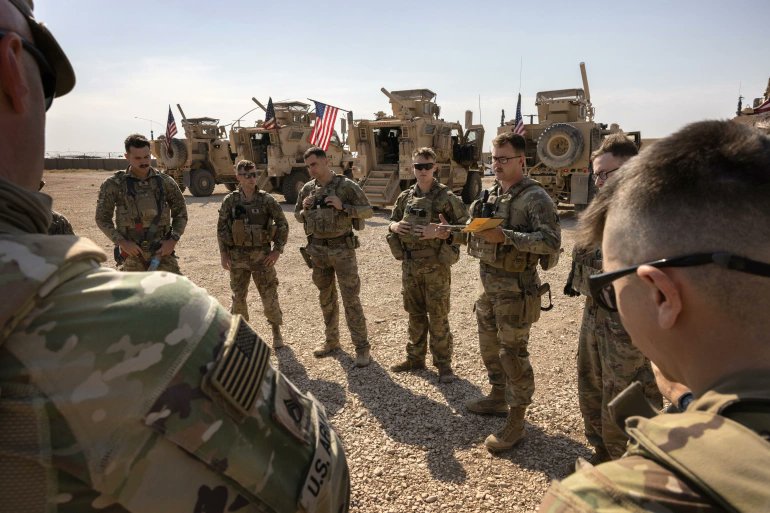
Since the US withdrawal from Afghanistan, there has been speculation that the US might also leave Syria, but the Biden administration has been quick to dispel such rumors. In the latest comments, Biden officials told Al Jazeera that a Syria withdrawal wouldn't be happening any time soon.
An assistant to a senior Middle East official on Biden's National Security Council said the administration had given "assurances" to the US-backed Kurdish forces in Syria that the US would not be leaving. Earlier in October, a Syrian Kurdish official traveled to Washington and met with Biden officials who promised the US would continue its military presence in Syria.
Officially, the US is in Syria to support the Kurdish-led Syrian Democratic Forces (SDF) against ISIS. But the presence is really a part of a broader campaign against the Syrian government. The region of eastern Syria where the US has about 900 troops is where most of the country's oil fields are, and the occupation keeps the resource out of the hands of Damascus.
|
The Pentagon's offer of "condolence money" to the relatives of the ten people (seven of them children) who were killed in the final U.S. drone strike in Afghanistan - originally declared righteous and necessary - bears a troubling connection to the government's ongoing efforts to get its hands on WikiLeaks founder Julian Assange and punish him for exposing the inconvenient truth of war.
You know, the "classified" stuff - like Apache helicopter crewmen laughing after they killed a bunch of men on a street in Baghdad in 2007 ("Oh yeah, look at those dead bastards") and then smirked some more after killing the ones who started picking up the bodies, in the process also injuring several children who were in the van they just blasted. This is not stuff the American public needs to know about!
|
|
Having invaded Yemen in 2015 with an eye toward reinstalling the Hadi government, Saudi Arabia is facing a reality where the war is being lost, and under growing pressure to end a naval blockade that has caused starvation in Yemen.
There are pushes to get a ceasefire in place, and ultimately end the war. While this would get the Saudis out of the negative coverage of the war, the kingdom seems to be focused on what they can get out of the US for heading down this path.
Saudi officials are emphasizing the need for missiles, air defenses, and attack drones, and are keen to get those from the US. The Saudis are pushing this despite having been buying billions of dollars in weapons annually during the Yemen War.
|
Only two months ago Washington's 20-year Afghan experiment in nation-building collapsed both suddenly and ingloriously. The Biden administration would like to forget the entire disastrous experience.
President Joe Biden is not to blame for the disaster, however. The three previous administrations sought to make Afghanistan's government and military in America’s image, rather than as representatives of the Afghan people. Moreover, argued Baktash Ahadi, a former interpreter for U.S. forces, Washington "mistook the Afghan countryside for a mere theater of war, rather than as a place where people actually lived," while relying upon the worst, most venal forces for support. For many Afghans, the Taliban seemed the lesser evil.
|
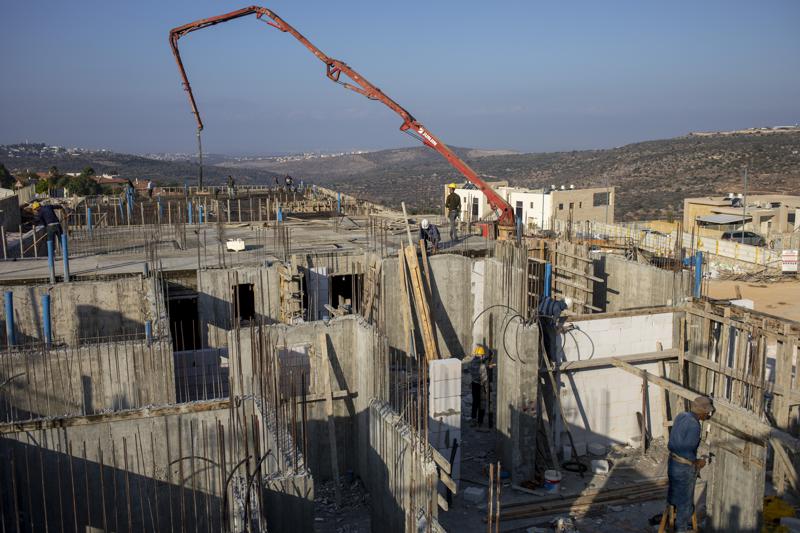
On Wednesday, Israel moved forward plans to build about 3,000 new settler homes in the occupied West Bank despite statements from the Biden administration against settlement expansion.
The Israeli Defense Ministry's higher planning council that approves new settlements said 1,804 units were given the final approval for construction, and another 1,326 units were advanced to a stage of preliminary approval.
The move came a day after the Biden administration condemned Israel’s plans. "We are deeply concerned about the Israeli government's plan to advance thousands of settlement units tomorrow, Wednesday, many of them deep in the West Bank," State Department spokesman Ned Price told reporters.
|
|
|
Keep your finger on the pulse of US foreign policy. Subscribe to our Daily Digest and each evening, the day's top news stories and editorials are delivered straight to your email. Please support our work by signing up.
|
|
|
Antiwar.com, 1017 El Camino Real #306, Redwood City, CA 94063 | 323 512 7095 | www.antiwar.com
|
|
|
|