
Your source for US foreign policy.
|


June 24, 2020
|
|
|
|

|
|

US-Russia arms control talks started in Vienna on Monday as the fate of the last nuclear arms control treaty between the two powers hangs in the balance. Russia has offered to extend the New START treaty, which is set to expire in February 2021, but the Trump administration has not agreed to the extension, calling for China to get involved in a new deal.
The US formally invited China to attend the talks, but Beijing has been clear in saying they have no interest in trilateral arms control agreements since China’s nuclear arsenal is much smaller than the US and Russia’s. President Trump’s lead envoy for the talks continues to focus the conversation on China.
— By Dave DeCamp
|
|
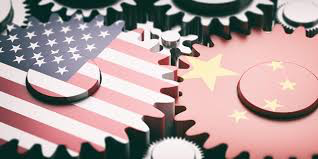
In an era of globalized trading, the idea of “decoupling” from another nation’s economy, totally cutting off all economic dependencies, is a tall order. Nowhere is that more of an issue than with the United States and China, with over $600 billion in annual trade.
After damaging trade wars with China, and a day after Trump’s top trade adviser said complete decoupling isn’t a “reasonable policy” that could actually be considered, President Trump is still insisting it remains an option that is on the table.
— By Jason Ditz
|
|

With an already shattered medical infrastructure due to the five-year US-Saudi siege, Covid-19 has rapidly spread through Yemen. The Arab country lacks the basic necessities for preventative measures like clean water, and a population facing malnourishment is especially vulnerable to the disease. A recent uptick in Saudi bombing might put a country already on the brink of collapse over the edge.
Last week, Saudi warplanes pounded Yemen’s capital Sanaa, in what residents called the worst airstrikes they have seen since the first years of the war. Seventy-seven airstrikes hit several provinces in north Yemen within 24 hours. According to the Houthi’s health ministry and NGOs on the ground, one of the strikes hit a car traveling in the Sadaa province and killed 13 civilians, including four children.
— By Dave DeCamp

Though the bizarre story has been subsumed by other events, last month’s aborted invasion of Venezuela should’ve hardly shocked anyone. The United States has long used mercenaries to do its bidding. They have provided Washington distance and deniability for unsavory operations. During the Cold War, the U.S. hoped this would limit domestic and international protest. Policymakers also discerned mercenary alternatives to bloody, expensive quagmires like the Vietnam or Iraq Wars.
— By Maj. Danny Sjursen, USA (ret.)
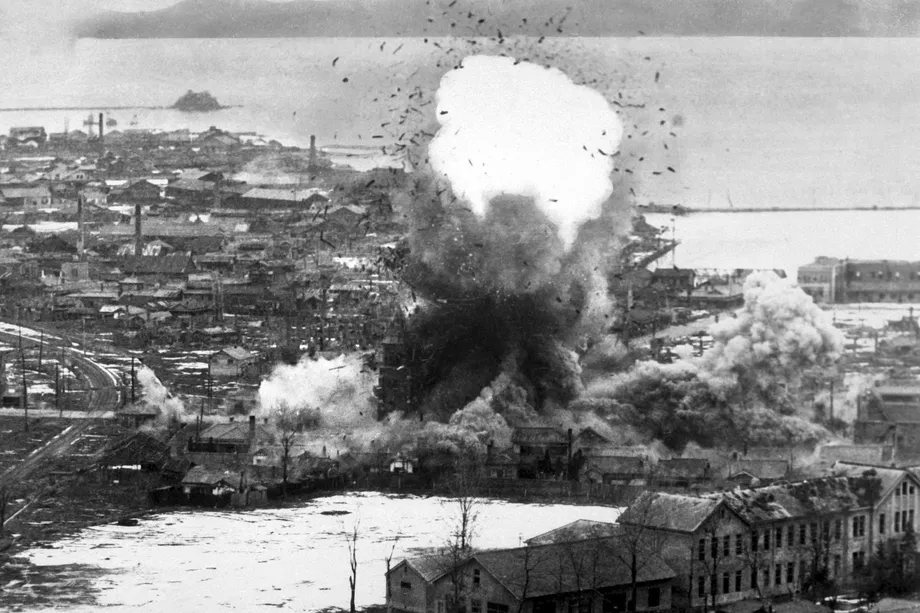
For a brief moment in the summer of 1945 there was joy in Korea. Koreans, who had suffered tremendously during half a century of brutal Japanese occupation and World War II, celebrated what they believed was their liberation by victorious US and Soviet forces. Full of hope for a future free of foreign rule, they proudly declared their independence; however, Supreme Allied Commander Douglas MacArthur announced that the US and the USSR would be occupying – and dividing – the entire Korean peninsula.
— By Brett Wilkins

In June 1982, the grassroots antinuclear movement in the U.S. (and much of the world) was cresting. The June 12th march and rally in New York City would draw well over half a million protesters, with some observers calling it the largest such gathering in the country’s history. Many new films with nuclear themes suddenly appeared, including the popular Atomic Cafe.
— By Greg Mitchell


Do you want more news?
Keep your finger on the pulse of US foreign policy. Subscribe to our Daily Digest and each evening, the day's top news stories and editorials are delivered straight to your email. Please support our work by visiting Antiwar.com/donate.

Antiwar.com, 1017 El Camino Real #306, Redwood City, CA 94063 | 323 512 7095 | www.antiwar.com
|
|