Your source for foreign policy news.
|
|
|
|
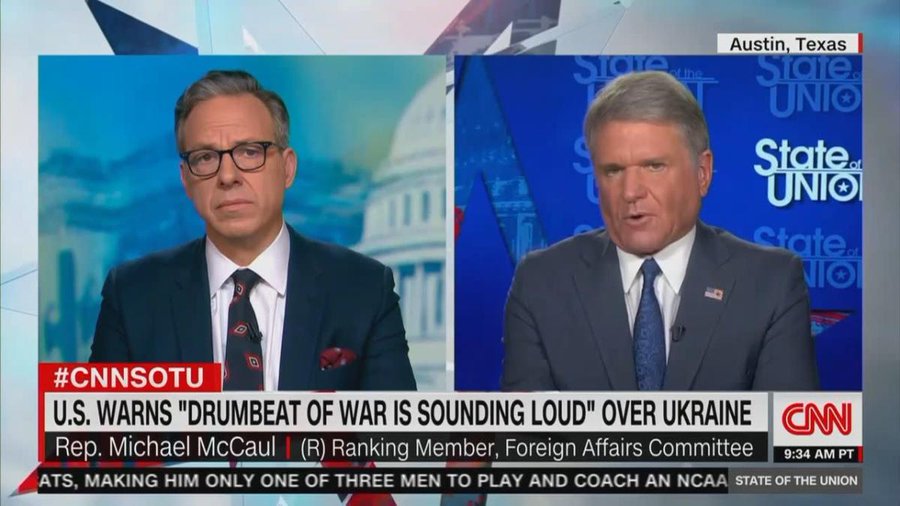
The Pentagon said Monday that Secretary of Defense Lloyd Austin has placed 8,500 troops on "heightened alert" to prepare for a possible deployment to Eastern Europe as President Biden mulls military options to escalate tensions with Russia.
Pentagon spokesman John Kirby stressed that the troops have only been put on alert and that "no decisions have been made to deploy forces from the United States at this time." The move comes a day after The New York Times reported that Biden was considering sending thousands of troops to Eastern Europe and the Baltics.
Kirby said the alert is about "reassuring the eastern flank of NATO," referring to Poland, Romania, and the Baltic states of Estonia, Latvia, and Lithuania. He said the troops on alert include "additional brigade combat teams, logistics personnel, medical support, aviation support, intelligence, surveillance, and reconnaissance." Kirby also reiterated Biden's stance that no US troops would be sent to Ukraine to fight Russia.
|
|
|
Rescue workers discovered five more bodies in the rubble of a prison in Saada, Yemen, that was hit by airstrikes from the US-backed Saudi-led coalition on Friday, bringing the death toll to 87, the aid group Doctors Without Border said.
Ahmed Mahat, head of the Doctors Without Borders mission in Yemen, told The Associated Press that rescue workers completed their search of the rubble on Saturday night. He said an additional 256 people were wounded in the strikes. Reports said most of the victims were migrants.
The prison attack was part of a series of Saudi airstrikes that pounded Yemen on Friday. In Hodeidah, Saudi airstrikes pummeled a telecommunications building, knocking out most of the countries internet. As of early Monday in Yemen, the near-total internet blackout continues. The Hodeidah strikes also killed three children while they were playing soccer.
|
It is ironic that even former right-wing Israeli Prime Minister, Benjamin Netanyahu, had rejected a Knesset (Israeli Parliament) bill which proposed to give the government greater power to control and suppress online content. This was in 2016, and the bill was introduced by Netanyahu's Likud party rival, Gideon Sa'ar.
Some analysts argued that Netanyahu had feared that a law aimed at suppressing Palestinian freedom of speech online could be exploited by his enemies to control his own speech and incitement. Now that Netanyahu is no longer in the picture, the bill is back, and so is Sa'ar.
Gideon Sa'ar is currently Israel's justice minister and deputy prime minister. While his boss, Naftali Bennett, is moving rapidly to expand settlements and to worsen already horrific realities for Palestinians on the ground, Sa'ar is expanding the Israeli military occupation of Palestinians to the digital realm.
|
|
Yes, many of its prisoners, swept up in the early days of the war on terror, had committed no hostile acts against this country or its allies (55% of them, according to one study). And yes, they were dressed in those unforgettable orange jumpsuits that ISIS would later so horrifically put on its own prisoners before slaughtering them. And yes, from the beginning, the treatment they received at Guantánamo, sometimes after having been brutally tortured in CIA "black sites" elsewhere, was a nightmare all its own.
If you doubt it, just consider Sean Baker's experience. A "model" American soldier who had been in the first Gulf War and volunteered again right after 9/11, he was assigned to the new prison as a military policeman. He would then be ordered to play an uncooperative prisoner in an orange jumpsuit so that the guards could practice on him and promptly would have the you-know-what beaten out of him by those very same guards, who mistook him for an actual prisoner, leaving him experiencing epileptic-style seizures 10 to 12 times a day.
|
By Karen Greenberg and Tom Engelhardt
|
There has been much hype in recent years over headaches and other symptoms US diplomats and spies have experienced while deployed overseas. This phenomenon has been nicknamed the "Havana Syndrome" since the first reports of the symptoms came from diplomats in Cuba.
The assumption is that the mysterious illness is the work of a hostile foreign power, such as China or Russia, using microwave weapons. But NBC News reported Wednesday that the CIA has ruled out the possibility that the majority of Havana Syndrome cases were "the result of a sustained global campaign by a hostile power."
|
Last week's Houthi attack on Abu Dhabi spiked the price of oil and raised concern about the business environment of the United Arab Emirates. The response was an increase in Saudi-led airstrikes on northern Yemen, with nearly 100 killed in an attack on the Saada prison.
Monday, the Houthis fired more missiles at Saudi Arabia and the United Arab Emirates. This is leading to more angry threats of reprisals, and Houthi warnings that more strikes will continue so long as Yemen remains under siege.
|
|
|
Keep your finger on the pulse of US foreign policy. Subscribe to our Daily Digest and each evening, the day's top news stories and editorials are delivered straight to your email. Please support our work by signing up.
|
|
|
Antiwar.com, 1017 El Camino Real #306, Redwood City, CA 94063 | 323 512 7095 | www.antiwar.com
|
|
|
|